What We Do

Services

Everything we pour, patch and finish, from a small step repair to a full driveway.

Home › Services

Everything we take on

Every job below is one we do ourselves across Bowie.

Concrete Driveways

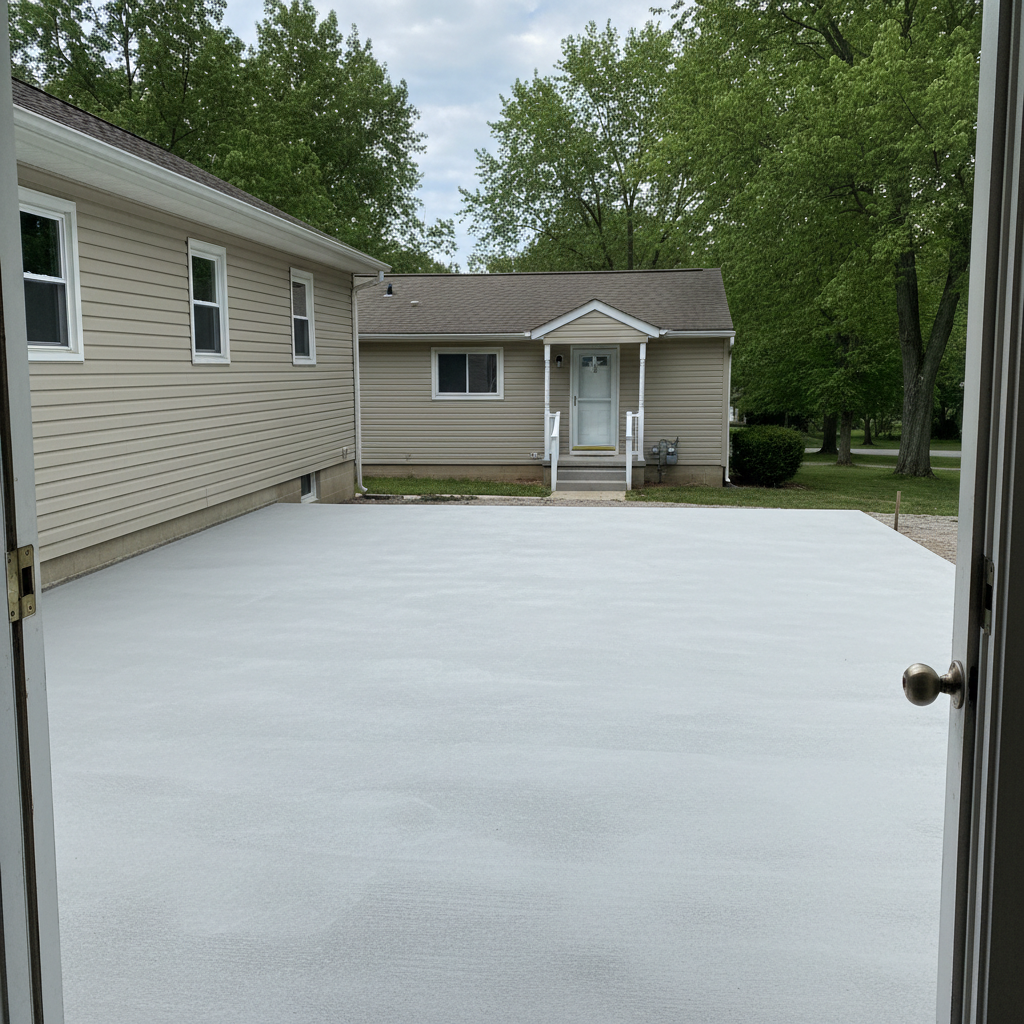
We excavate, compact the base and set forms before any concrete gets ordered. Driveways get rebar instead of wire mesh, because mesh alone doesn't hold a slab together once a truck or trailer sits on it for years. We pour at 4 inches minimum, more if you're parking something heavy, and air-entrain the mix so it survives Maryland's freeze-thaw cycles without scaling.

Concrete Patios

Patios get a broom or stamped finish depending on what you want, and we slope every pour away from the house so water doesn't pond against the foundation. We cut control joints the same day we finish the surface, before the slab decides where to crack on its own.

Stamped Concrete

We stamp patios, walkways and pool decks in a range of patterns, from running bond brick to ashlar slate. Color hardener goes down before the stamp, and a sealer goes on after cure, which is what keeps the pattern from fading under UV and foot traffic.

Concrete Repair

Cracked slabs, spalling driveways and sunken sections don't always need a full tear-out. We can mudjack or foam-lift a settled slab back to grade, saw-cut and replace a cracked panel, or patch surface spalling caused by deicing salt. If the base underneath has washed out, replacement is the honest answer, and we'll tell you that instead of patching over a problem that'll come back.

Concrete Slab Foundations

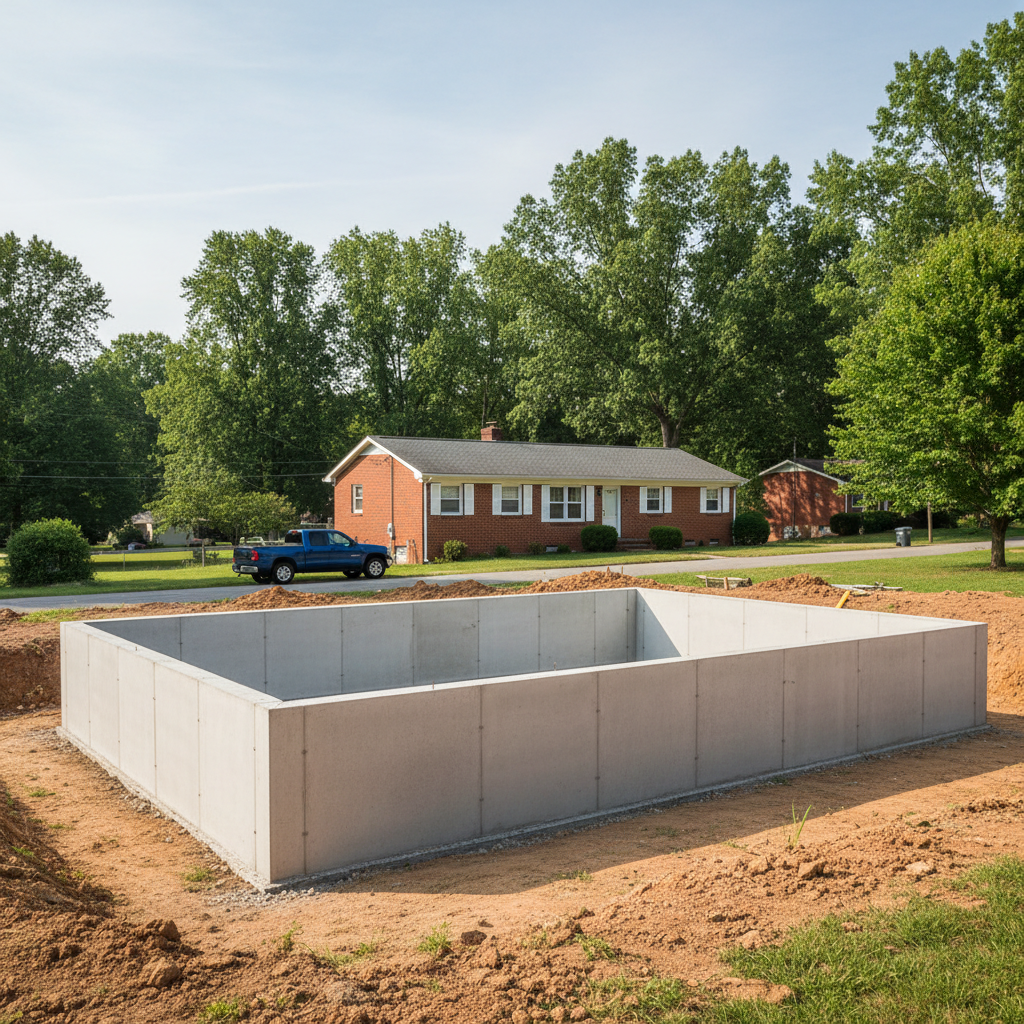
We pour slabs for sheds, garages and additions, with thickness and rebar schedule sized to what's going on top of it. A shed slab and a garage slab carrying a car aren't the same job, and we price them differently for that reason.

Concrete Sidewalks

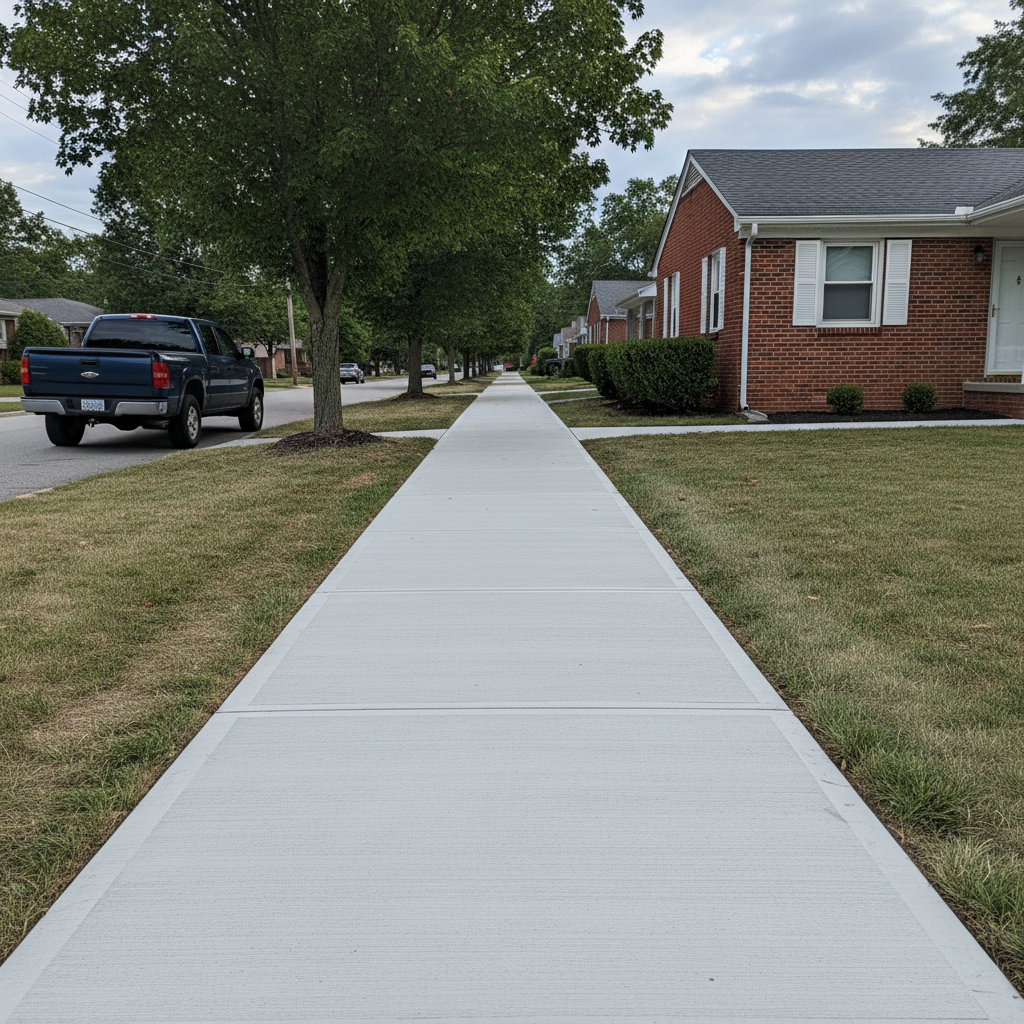
Walkways get poured to the width and slope the county requires, usually a 1 to 2 percent cross-slope so water runs off instead of sitting and icing. We finish with a broom texture for grip, not a smooth trowel finish that turns slick in frost.

Concrete Steps & Stairs

Front steps settle and crack more than almost anything else on a property, usually because they were poured on fill dirt instead of compacted base or proper footings. We rebuild them on footings set below the frost line, so they stay level instead of pulling away from the porch again in a year or two.

Concrete Resurfacing

If the slab underneath is sound but the surface is pitted, scaled or just ugly, a bonded overlay can give you a new wearing surface without a full tear-out. It's not the right fix for a slab with structural cracks or a failed base, and we'll tell you if that's what you're looking at.

Exposed Aggregate Concrete

We expose the stone in the mix by washing off the top layer of cement paste before it fully cures, which gives you a non-slip, textured surface that holds up well on pool decks and walkways. It costs more than a standard broom finish because of the extra labor and timing involved.

Concrete Retaining Walls

Small retaining walls holding back a few feet of grade get poured or block-built with drainage behind them, because a wall that traps water instead of letting it weep out is a wall that eventually leans. We size footings to the soil and the height of the wall, not a one-size answer.

How It Works

Four steps, and no surprises in any of them.

01

We come and look

You tell us what you want doing, we look at what is actually there, and we ask the awkward questions early.

02

You get a price

In writing, itemised, free. If something might add cost later we flag it now rather than at the end.

03

We do the work

Same crew throughout. We cover your floors, keep the dust down and tidy up before we leave each day.

04

We walk it with you

You point out anything you are not happy with and we fix it before the invoice, not after.

Where We Work

All of this, across Bowie, MD

Concrete crews don't love long drives on pour day, here's how far this one typically goes.

Bowie, MD
Washington, MD
Baltimore, MD
Columbia, MD
Silver Spring, MD
Waldorf, MD
College Park, MD
Annapolis, MD
Laurel, MD
Greenbelt, MD
Crofton, MD
Common Questions

Things worth asking

Questions that come up once a concrete project is actually underway.

Is a permit needed for a new driveway or patio?
Driveway aprons and public sidewalk sections usually require a permit from the county, while a private backyard patio often does not. Pulling any required permit is typically handled as part of the quoted concrete job.
How long does a typical concrete project take?
A standard driveway or patio pour takes one to three days for forming, pouring and finishing, plus a curing period before it can be driven on. Full cure for strength takes about 28 days, though walking on the surface is usually fine after 24 to 48 hours and driving after about a week.
Can the project be adjusted to fit a budget?
Slab thickness, finish type and square footage can all be adjusted to fit a budget, and those tradeoffs should be discussed before a quote is finalized. A plain broom finish with standard rebar is the most budget-friendly option for a driveway.
Is concrete work guaranteed?
Workmanship on a concrete pour is typically guaranteed against cracking caused by poor base prep or finishing error, separate from the concrete supplier's own material warranty. Normal shrinkage cracking at control joints is expected and isn't a workmanship defect.
Who handles day-to-day questions once the job starts?
The crew lead on site is the point of contact for questions once a concrete job starts, not a separate office number. Decisions about finish, color or last-minute changes get made directly with whoever is running the pour.
What kind of concrete mix is used?
Driveways and other load-bearing slabs typically get air-entrained concrete around 3,500 to 4,000 PSI with rebar reinforcement, while patios and walkways may use wire mesh and a slightly lower strength mix. Air entrainment is what lets a Maryland slab survive repeated freeze-thaw cycles without scaling.
Can someone stay home during the concrete work?
Staying home during a driveway or patio pour is fine, though the work area itself needs to stay clear of foot and vehicle traffic until the concrete sets. Expect some noise from the concrete truck and equipment during the pour and finishing window.
How should the site be prepared beforehand?
Clearing cars, patio furniture and other obstacles from the work area before the crew arrives saves time on pour day. Sprinkler lines and buried utilities in the area should be flagged or mentioned ahead of excavation.
What happens if something unexpected turns up mid-job?
Soft spots, old buried debris or unexpected utility lines sometimes show up once excavation starts, and that gets flagged before pouring continues. Any added cost or scope change from an unexpected site condition gets discussed before work proceeds, not added to the final bill as a surprise.
How should new concrete be cared for afterward?
New concrete should be kept off vehicles for about a week and off foot traffic for the first 24 to 48 hours while it cures. Sealing every few years and avoiding rock salt in the first winter both help prevent surface scaling.

Not sure what you need?

Describe the problem and we will tell you what it probably is. No obligation.
Call (301) 756-5392